
gfdgfdg
Search in blog
Blog categories
Latest posts
Compare stable horse rugs and turnout rugs, including their pros, cons, warmth, waterproofing and everyday...
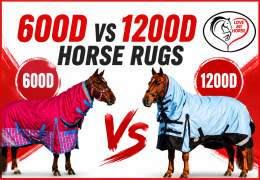
Not sure whether to choose a 600D or 1200D horse rug? Learn the real differences in durability, waterproof...
Learn how to choose the right winter horse cover with our complete Australian guide. Discover the best fill weight,...
Learn when to use a cotton horse rug, the benefits of breathable cotton fabrics, and why cotton horse rugs remain a...
Popular posts
Featured posts
Blog tags
Photo gallery
No featured images
Archived posts
Top authors
-
Kerry Gibson 37 Posts View posts -
Fly Rugs & Fly Sheets for Horses: How to Choose the Right Insect Protection
❤️ How Do Fly Rugs & Fly Sheets Protect Horses?
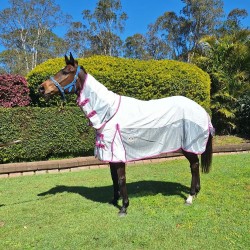
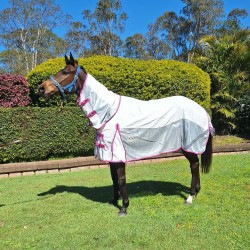
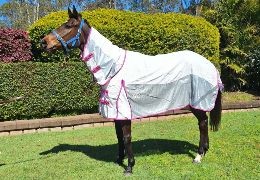
A fly rug or fly sheet works primarily by creating a physical barrier between your horse and flies, mosquitoes, midges and other irritating insects.
Unlike heavier horse rugs designed for warmth or weather protection, fly rugs are made from lightweight, breathable fabrics or mesh that allow air to circulate while covering vulnerable areas of the horse’s body.
For many horses, this simple physical coverage can make a big difference during the warmer months. A well-fitting fly rug can help reduce direct contact with insects and give your horse relief from the constant irritation that can lead to tail swishing, stamping, skin twitching and biting at their body.
You may see these rugs described as fly rugs, fly sheets, mesh horse rugs, summer mesh rugs or insect protection rugs. While the terminology varies, they share the same basic purpose: providing breathable physical coverage between your horse and insects.
However, not all fly rugs provide the same type of protection.
Traditional mesh fly rugs rely primarily on physical coverage, while newer insect-repellent horse rugs can combine that physical barrier with technology designed to help deter insects from landing and biting.
❤️ Physical Fly Protection vs Insect-Repellent Fly Rugs
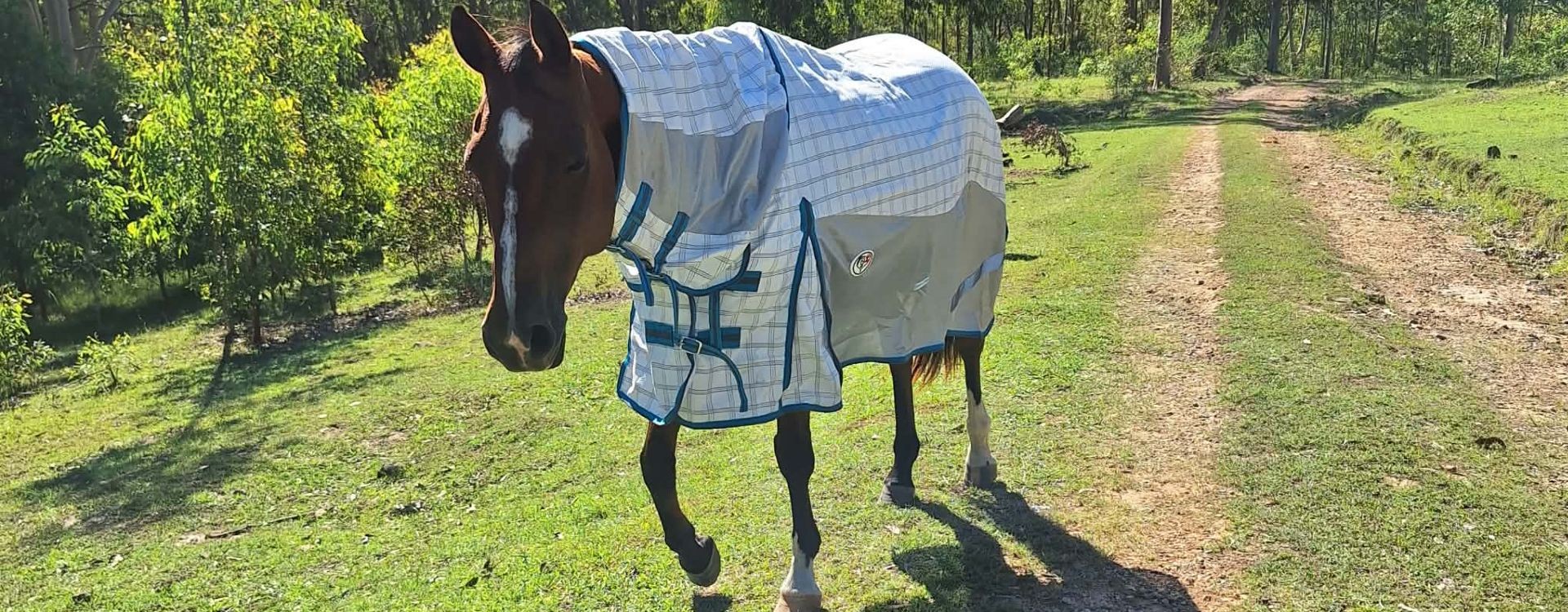
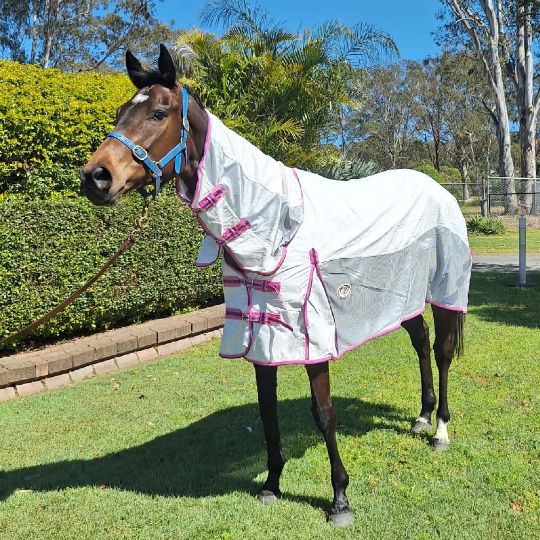
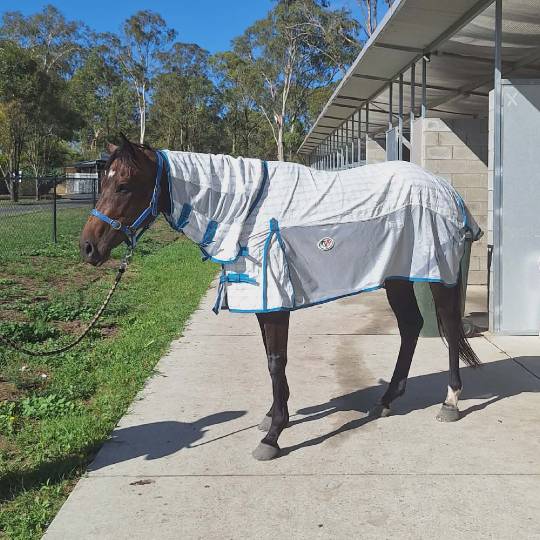
Traditional fly rugs and fly sheets protect your horse primarily through physical coverage. The fabric or mesh creates a barrier that helps prevent flies and other insects from reaching the horse’s skin, while still allowing air to circulate.
For many horses, good physical coverage is all they need. A well-designed mesh fly rug with generous body coverage, a secure neck and good belly protection can provide effective everyday protection throughout the warmer months.
Insect-repellent horse rugs take a different approach by combining that physical barrier with an additional form of protection.
Rather than relying on coverage alone, repellent fly rugs use insect-repellent technology designed to help discourage insects from landing on the horse and remaining on the fabric.
This means there are two distinct approaches to consider:
Traditional fly rug or fly sheet:
Provides a physical barrier between your horse and insects.
Insect-repellent fly rug:
Provides physical coverage plus insect-repellent protection designed to help reduce insect landings and bites.
Neither approach automatically makes one rug the right choice for every horse. The best option depends on your horse, the insects in your area, the amount of coverage required and how badly your horse is affected during fly season.
For horses that are particularly bothered by flies and biting insects, combining physical fly protection with insect-repellent technology can provide an additional layer of protection.
❤️ Learn More About Spring Rugging
- When Should Horses Wear a Rainsheet?
- How to Choose the Right Horse Rug
- Horse Rug Fit Guide
- When Should You Use A Cotton Horse RUg
- How To Choose The Right Rainsheet
❤️ Recommended Spring Horse Rugs
❤️ What Is IR3535 & How Does It Work in a Horse Rug?
IR3535 is an insect-repellent technology designed to help deter insects from landing and biting.
In Love My Horse IR3535 rugs, the insect-repellent technology is built into the fabric, so the rug provides two forms of protection at the same time: the physical barrier created by the rug itself and the additional protection provided by IR3535.
This is particularly useful when a horse is dealing with persistent flies and biting insects. While a traditional mesh fly rug relies on the fabric to create a barrier between the insect and the horse, an IR3535 insect-repellent horse rug is designed to also help reduce insects landing and remaining on the rug.
Importantly, IR3535 does not replace good rug design and coverage. The fit of the rug, airflow through the mesh and the areas of the horse that are physically protected still matter. The repellent technology provides an additional layer of insect protection alongside that physical coverage.
At Love My Horse, we use IR3535 fabric across several different rug designs so you can choose the type of protection that best suits your horse and conditions — from a full Dura Mesh IR3535 fly rug through to cotton-topline and 600D-topline IR3535 mesh rugs.
Our IR3535 range is also available across Standard, Mini and Clydesdale/heavy horse sizing, because effective fly protection still starts with a rug that fits the horse properly.
❤️ IR3535 vs Permethrin Horse Rugs — What's the Difference?
When researching insect-repellent horse rugs, you may also come across rugs described as permethrin-treated fly rugs. While both are designed to provide additional insect protection alongside the physical barrier of a rug, IR3535 and permethrin are different technologies.
Permethrin is an insecticide used in a range of insect-control applications, including some treated fabrics and horse products. Its action against insects differs from IR3535, which is used as an insect repellent.
Love My Horse has chosen IR3535 technology for our insect-repellent rug range. In our rugs, the technology is built into the fabric, combining repellent protection with the physical coverage of the rug itself.
Whichever type of insect-protection rug you are considering, it is worth looking beyond the words “insect repellent” and checking exactly what technology is being used, how it is incorporated into the fabric, and what testing supports the product claims.For LMH, those details matter.
We want horse owners to understand what is actually in the rug they are putting on their horse — and what it has been designed to do.
❤️ Which Fly Rug Is Right for Your Horse?
There isn't one fly rug that will suit every horse or every Australian summer.
Some horses cope extremely well in a traditional mesh fly rug, where the priority is lightweight physical coverage and maximum airflow. Others are far more bothered by flies, mosquitoes, midges and biting insects and may benefit from the additional protection offered by an insect-repellent fly rug.
A traditional fly rug or fly sheet may be a good choice when your horse mainly needs a lightweight physical barrier from flies, you want plenty of airflow through the rug, and biting insects are not a major problem.
An IR3535 insect-repellent fly rug may be worth considering when your horse is particularly bothered by insects, biting insects are a significant problem in your area, or you want to combine physical coverage with an additional repellent component.
Your horse's environment matters too. Insect pressure can vary enormously depending on the season, rainfall, humidity, nearby water, vegetation and where your horse spends their time.
That is why the best fly protection isn't necessarily about choosing the rug with the most features.
It's about choosing the right combination of coverage, airflow, durability and insect protection for your individual horse.
❤️ Choosing Fly Rug Coverage & Fit
A fly rug can only protect the areas of your horse that it actually covers — and that makes fit and coverage just as important as the fabric itself.
Look for a fly rug that provides generous coverage without restricting your horse's natural movement. The chest should sit comfortably without pulling across the shoulders, the neck should provide good coverage when the horse lowers its head, and the body of the rug should have enough depth to protect the sides of the horse.
Belly coverage can also be particularly valuable during fly season. Flies and biting insects don't restrict themselves to the horse's topline, so protecting the underside of the horse can make a significant difference for horses that are particularly sensitive to insects.
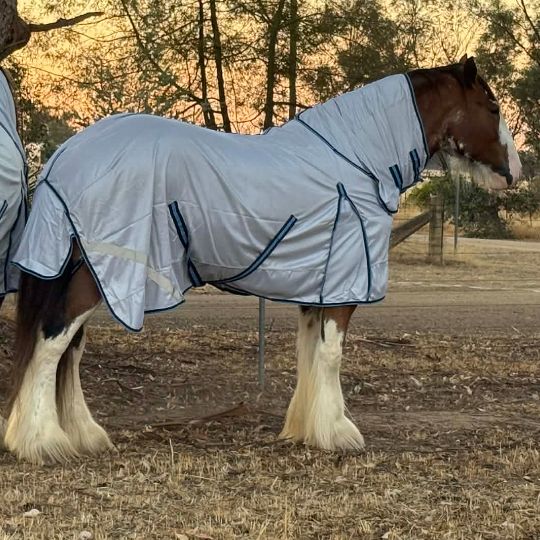
Fit becomes particularly important for horses that don't conform to standard proportions. Minis, ponies, broad-chested horses and heavy breeds can all have very different body shapes, which is why simply going up or down a rug size doesn't always solve a fitting problem.
At Love My Horse, our fly rug range includes options specifically designed across Mini, Standard and Clydesdale/heavy horse sizing, so the aim isn't simply to cover the horse — it's to provide practical insect protection in a rug shaped to fit them properly.
| Rug Type | Best For | Protection |
| Soft Mesh | Everyday summer coverage | Physical fly barrier |
| Dura Mesh | Horses needing tougher mesh | Physical fly barrier |
| IR3535 Dura Mesh | Higher insect pressure | Physical + repellent |
| Cotton Topline + IR3535 | Sun/topline + insect protection | Physical + repellent |
| 600D Topline + IR3535 | Changeable/wet weather | Physical + repellent |
❤️ Do Insect-Repellent Horse Rugs Replace Fly Sprays?
Not necessarily. Even a well-designed fly rug cannot cover every part of your horse, so exposed areas such as the face and lower legs may still need additional protection when insects are particularly active.
A fly rug or fly sheet provides physical coverage, while an IR3535 insect-repellent rug adds repellent protection to the areas covered by the rug. Fly sprays or other suitable insect-control products can then be used on exposed areas when required.
The right combination will depend on your horse, their sensitivity to insects and the conditions in your area.
Traditional Fly Rug
Best for everyday physical fly protection
- Creates a physical barrier between your horse and insects
- Lightweight, breathable mesh for summer airflow
- Ideal where flies are the main concern
- Available in different mesh weights depending on durability needs
LMH options: Soft Mesh and Dura Mesh
IR3535 Insect-Repellent Fly Rug
Physical coverage + insect-repellent technology
- IR3535 technology is built into the fabric
- Helps deter insects from landing and biting
- Adds repellent protection to the physical barrier of the rug
- Ideal for horses experiencing higher insect pressure
LMH options: IR3535 Dura Mesh, Cotton Topline + IR3535 Mesh and 600D Topline + IR3535 Mesh
IR3535 Test Results
Tested insect-repellent performance
95% reduction in insect landings
94% protection against bites
88% repellent performance retained after 10 washes
Results are based on testing of the IR3535 fabric/technology and should not be interpreted as a guarantee of identical results for every horse or environment.
❤️ Frequently Asked Questions About Choosing the Right Horse Rug
The best horse rug depends on the season, your local climate, your horse's age, coat condition and workload. Lightweight rugs are often suitable during spring and autumn, mesh rugs are popular in summer, while waterproof winter rugs provide warmth and protection during colder months.
Yes. As the seasons change, your horse's rugging needs also change. During winter, the priority is keeping your horse warm and protected from cold, wind and rain. As temperatures rise through spring and summer, the focus shifts to keeping your horse cool while providing protection from flies, insects and harmful UV rays. Choosing the right rug for each season helps keep your horse comfortable throughout the year.
There isn't a fixed date. Instead, monitor overnight temperatures, rainfall and your horse's comfort. Many owners begin introducing waterproof or lightweight winter rugs during autumn before moving to heavier winter rugs as temperatures continue to fall.
Australia's climate varies greatly, so there is no single rug that suits every horse. Breathable mesh rugs are ideal for hot summers, waterproof rainsheets work well during changing weather, and insulated winter rugs provide warmth during colder months.
Some horses benefit from wearing rugs daily, while others may not need one at all. Rugging depends on your horse's age, coat, health, workload and the weather. Regularly checking your horse helps ensure they remain comfortable without becoming too hot or too cold.
Check beneath the rug by placing your hand behind your horse's shoulder or along the chest. Your horse should feel comfortably warm, not sweaty or cold. Adjust rug weight whenever weather conditions change.
Quality waterproof horse rugs are designed with breathable fabrics that help prevent moisture build-up while keeping rain out. Breathability improves comfort by allowing excess heat and moisture to escape.
No. Mesh horse rugs also provide shade from the sun, help reduce UV exposure and protect the coat from dust and dirt while allowing excellent airflow during hot weather.
Most horse owners find that having a lightweight or fly rug, a waterproof rainsheet, and a winter rug provides enough flexibility to manage changing weather throughout the year.
One of the most common mistakes is choosing a rug based solely on the season rather than the actual weather and the horse's individual needs. Regularly checking your horse and adjusting rugs as conditions change is the best way to keep them comfortable.
❤️ Final Word
Choosing the right horse rug isn't about using the same rug all year. As Australia's seasons change, so do your horse's rugging needs. By selecting the right rug for the weather, your horse's workload and individual needs, you can help keep them comfortable throughout the year.
If you're still unsure which horse rug is right for your horse, explore our detailed seasonal guides or browse our range of waterproof, winter, summer and fly rugs to find the best option.
❤️ Horse Rug Knowledge Guide
Explore our growing collection of horse rug guides, fitting advice, seasonal care articles and answers to frequently asked horse rug questions.
Browse the Horse Rug Knowledge Guide →
Related products
Rainsheet IR3535 Fly Repellent Hybrid Horse Rug | Blue
Rainsheet IR3535 Fly Repellent Hybrid Horse Rug | Pink
Mini Rainsheet IR3535 Fly Repellent Hybrid Horse Rug Pink
Mini Rainsheet IR3535 Fly Repellent Hybrid Horse Rug Blue
Mini IR3535 Fly Repellent Mesh Horse Rug Pink
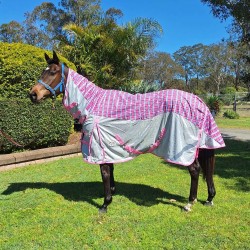
Fly Repellent IR3535 Mesh Horse Rug Pink
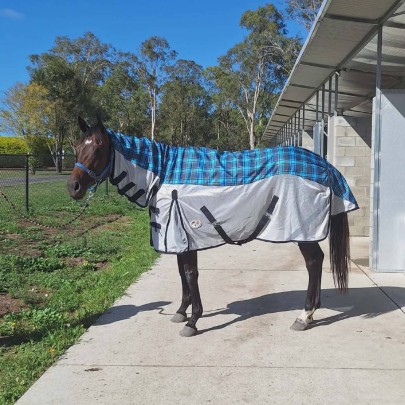
Fly Repellent IR3535 Mesh Horse Rug Blue
Mini IR3535 Fly Repellent Mesh Horse Rug Blue
Clydesdale IR3535 Fly Repellent Mesh Horse Rug Pink
Clydesdale IR3535 Fly Repellent Mesh Horse Rug Blue
Clydesdale Rainsheet IR3535 Fly Repellent Hybrid Horse Rug | Blue
Cotton IR3535 Fly Repellent Hybrid Horse Rug | Blue
Cotton IR3535 Fly Repellent Hybrid Horse Rug | Pink
Mini Cotton IR3535 Fly Repellent Hybrid Horse Rug | Pink
Leave a comment
Related posts
Layering Horse Rugs: How to Keep Horses Warm in Winter
Common Insects That Affect Horses in Australia (And How to Protect Your Horse)
Choosing the Right Horse Rug for Every Season in Australia
Clipping Your Horse: When to Clip and How to Rug a Clipped Horse
Stabling Horses in Australia: Pros, Cons and Best Alternatives


.jpg)